

Commentary
By burying disagreements in imprecision, the new deal risks same fate as its predecessors.
James M. Acton
{
  "authors": [
    "Suzanne Maloney",
    "Aaron David Miller",
    "Karim Sadjadpour"
  ],
  "type": "questionAnswer",
  "blog": "Emissary",
  "centerAffiliationAll": "dc",
  "centers": [
    "Carnegie Endowment for International Peace"
  ],
  "englishNewsletterAll": "americanStatecraft",
  "nonEnglishNewsletterAll": "",
  "primaryCenter": "Carnegie Endowment for International Peace",
  "programAffiliation": "ASP",
  "programs": [
    "American Statecraft"
  ],
  "regions": [
    "Iran",
    "Middle East",
    "United States"
  ],
  "topics": [
    "Domestic Politics",
    "Foreign Policy"
  ]
}
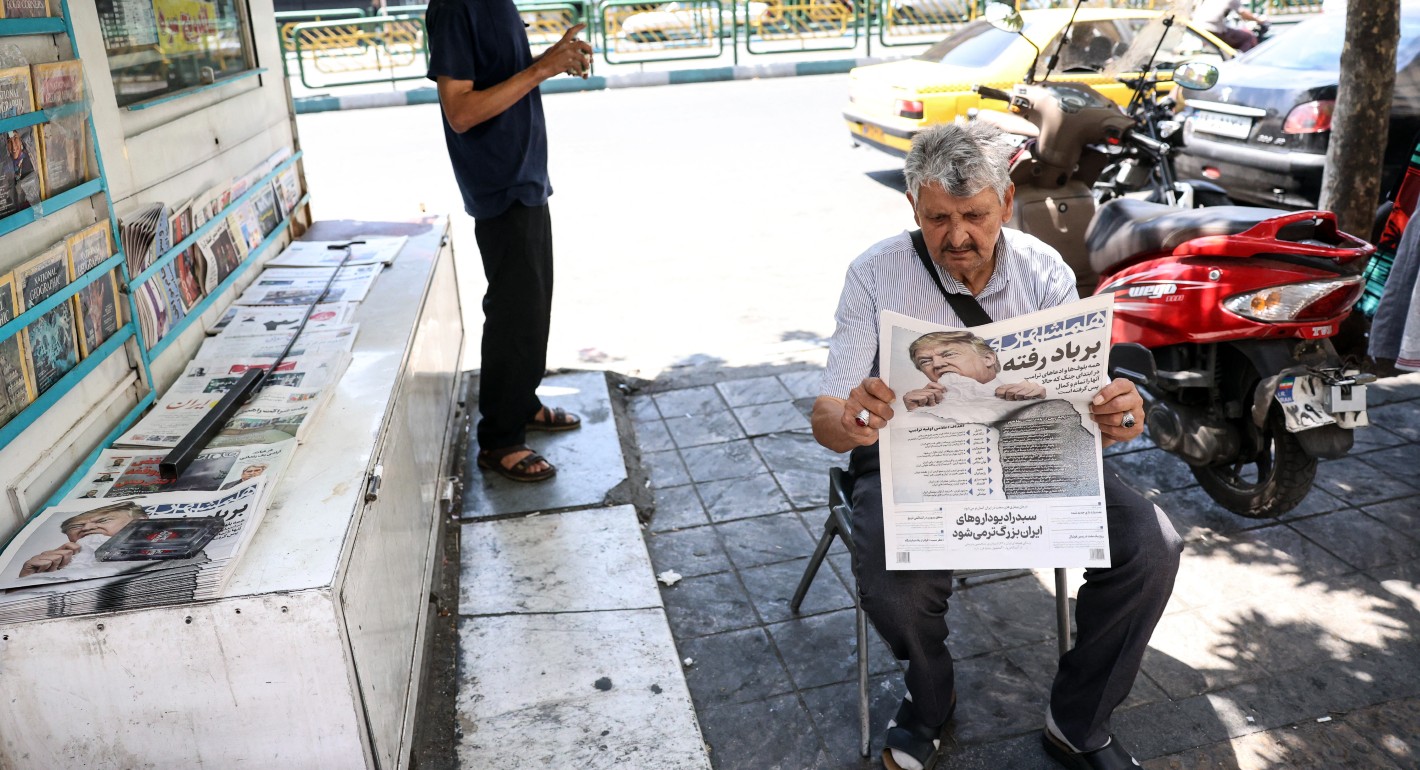
A man reads a newspaper in Tehran on June 18, 2026. (Photo by AFP via Getty Images)
The United States and Israel may have unwittingly revived the Islamic Republic’s “zombie regime.”
On this week’s episode of Carnegie Connects, host Aaron David Miller spoke with Brookings Institution’s Suzanne Maloney and Carnegie’s Karim Sadjadpour about where the Iran war stands and what happens after a deal is signed.
Portions of their conversation, which have been edited and condensed for clarity, are below.
Aaron David Miller: How did the Iranians read [Operation Epic Fury]?
Karim Sadjadpour: This war has been an existential war for the Islamic Republic. It’s a ten-out-of-ten crisis, and they threw everything they could back at it. They recognized that the country’s top leadership could get assassinated—which is exactly what happened—so they already had in place a decentralized approach, in which the thirty-one provinces in the country each would have a Revolutionary Guard outpost. It would essentially be like thirty-one heads of an octopus. They didn’t need to have a central commander in Tehran giving them orders. They knew what the plan was: close down the Strait of Hormuz and wage an almost all-out war on America’s partners in the Gulf—launching many thousands of missiles and drones against the UAE in particular, but also Saudi Arabia and Qatar.
Iran understands that it can’t defeat America on the battlefield, but it can defeat America in the living room: spike the price of oil, sour public opinion against the war, in the hopes that the American public will eventually restrain President [Donald] Trump’s ambitions. In my view, they were successful. Obviously, they’ve been hurt badly as a result of this war, but for the Islamic Republic, the metric of success was survival, and they did that and then some.
Suzanne Maloney: Iran used its asymmetric capabilities to essentially put a stranglehold on the global economy. That meant that time was on their side. The president certainly could have continued the war, but that was at a price of continued depletion of key munitions that are not just essential for protecting and supporting our partners and allies in the region, but also for preserving our leverage in other theaters around the world, particularly the Indo-Pacific.
And it also came at a price for the global economy, and for [Trump’s] own prospects, and his party’s prospects in the upcoming midterm elections. That just gave Iran a certain leverage that was unimaginable at the start of the war given—the huge disparity between American military capabilities and what Iran has in terms of its own conventional military capabilities. It was this asymmetric power that Iran leveraged on its own behalf.
Karim Sadjadpour: I was thinking about the last time we had this scale of a debacle—perhaps the 2003 Iraq war. You can argue that the [Iraq] war was prosecuted by perhaps one of the most experienced U.S. national security teams in modern history and [the Iran war] was among the least experienced U.S. national security teams in modern history. They both led to a similar strategic defeat.
What is the through line? And the through line is what the ancient Greeks first taught us about: hubris. And this is unfortunately a common theme, and Trump succumbed to it. He believed that he was going to be the guy that ended this forty-seven-year menace of the Islamic Republic of Iran. Unfortunately, he may have unwittingly revived what I used to call a zombie regime.
Aaron David Miller: How should we interpret the decisionmaking process in Iran right now?
Suzanne Maloney: I think it’s a great question, and of course we’re all looking through the glass darkly at this point in time because of the difficulty in accessing Iran directly or even obtaining reliable, credible, sustained information about the way things are operating right now.
But what’s clear from the past several months is that this is a regime that was very well institutionalized. Even with the death of the supreme leader and a number of other senior officials, the regime was able to function, in part because of this decentralized defense doctrine, but also because it [has become] so deeply embedded over the past forty-seven years. It has a lot of experience, particularly in managing crises, because this is a system that has lurched from crisis to crisis, both internal and external, throughout its history. It’s clear that the balance of power now favors the men with the guns rather than the clerics. But this has always been a symbiotic relationship, and I would be cautious about assuming that the ideological dimensions of the regime have in any way modulated.
Karim Sadjadpour: I’ve been working on a study, which I haven’t yet published, looking at—just as a shorthand—who the top twenty men now ruling Tehran are. I put them into two camps: those who would describe themselves as being loyal to the principles of the revolution (we call them hard-liners), and then those who favor putting economic interests before that ideology (we call them pragmatists). And of the top twenty, by my count, about seventeen of them would define themselves as principlists. Seventeen of those twenty also are IRGC alums.
If we were having this exercise at the beginning of the revolution, it would have been mostly clerics, or perhaps half clerics even a decade ago. Now you only have a few people left of that top twenty most powerful who are wearing turbans, and one of them—Mojtaba Khamenei—we haven’t seen or heard from.
So what is the takeaway from this war? We may think that they’ve reached the conclusion that the organizing principle of the nation being “death to America” and “death to Israel” is a bad idea, because it’s led the country now into two incredibly ruinous wars. I think they have reached the opposite conclusion: Our principles, our revolutionary identity, is the glue that has kept our system together, that has kept the cohesion of the security forces. It allowed us to withstand a national uprising, which happened in January, as well as withstanding the most powerful military in the world, the United States, and the most powerful military in the region, Israel. I think that their lesson from this war is: Let’s double down on our principles.
Invalid video URL
Aaron David Miller: What’s your big-picture view of this [possible deal]? (Editor’s note: This episode taped prior to the signing of the memorandum of understanding.)
Suzanne Maloney: [The MOU] appears to be incredibly favorable to the Iranians.
The big picture is that the Iranians believe that they have achieved not just the survival and preservation of the regime, but a position that will enable them to change the strategic equation in the region. That’s a phrase that they used repeatedly. That means an Iran that is no longer isolated, not under siege from external powers and its own neighbors. It’s an Iran that is setting the agenda for the region, that can protect its proxies rather than relying on its proxies to protect the regime, and that can extend its influence directly, not simply through the force of those militia groups that it supports. That’s a very different Iran than has existed for many years. In some respects, it’s the apotheosis of the ambitions of the revolution.
My other understanding of what I can interpret from the documents is that Iran will be reintegrated in the region in economic terms that can be quite beneficial to the regime, to the people within the regime, and ideally to the people of Iran—although that is always very questionable with this set of people in power.
That regional reintegration also reflects a calculus by Iran’s neighbors that they can no longer rely on the United States to protect them. They are prepared to hug the danger closer rather than to try to police it through a third party. And that also will have consequences for not just the Islamic Republic, but also for American influence in the Middle East and more broadly around the world.
Karim Sadjadpour: Based on what Vice President [JD] Vance has said publicly, and based on some conversations I’ve had with folks in the administration, I think that their goal is to do a grand bargain with the Islamic Republic. The way they talk about this is essentially similar to how Trump approached Kim Jong-un in his first term. He talked about building hotels in North Korea and opening the country up. That is the way I hear them talking about the prospect of an Iran deal now: to essentially present two extremely divergent paths to the Islamic Republic. Path one is $300 billion in Gulf investment, no more sanctions, no more isolation, partnership. Path two is the exact opposite: continued isolation, sanctions, potential conflict.
If you’re coming at this from a real estate or finance background, that’s a no-brainer. But from the vantage point of a revolutionary government whose paramount goal is survival, rapprochement, global reintegration, all of those things pose perhaps more of an existential threat than the continuation of the status quo.
The danger here is that if his almost–Hail Mary approach doesn’t succeed and we don’t see any meaningful nuclear concessions from Iran for phase two, Trump could go back to conflict. He said [Wednesday morning] that he would go back to dropping bombs. Obviously that isn’t his preferred outcome, but I’m not of the view that we’re totally out of the woods and this conflict is over.
Aaron David Miller: Every time I hear the words “grand bargain” applied to the Middle East, it makes me very nervous.
Karim Sadjadpour: When I hear Vance talk about this, it’s as if he believes that no American administration has ever thought about this before. Virtually every administration since Jimmy Carter has recognized that it’s in the U.S. national interest to have good relations with Iran. It’s in Iran’s national interest to have good relationships with the United States. It’s not in the Islamic Republic’s interest to necessarily achieve that.
Suzanne Maloney: The other point that I think the administration fails to appreciate is that until 2010, the rest of the world did business as usual with the Islamic Republic, and there were very few meaningful constraints on investment or trade with Iran, except the ones that the regime imposed on itself.
So this idea that opening up Iran to trade and commerce is going to have some sort of transformational impact on the regime—let’s be realistic, that has not been the case for other ideological regimes that have been wholly integrated in the global economy, most notably Russia and China. We have to be a little bit more sophisticated than what we’re hearing from this administration about the likelihood of a grand bargain really resulting in the kind of better behavior and more responsible actor in Tehran than we’ve seen [before]. This regime wants to have its cake and eat it too.
Aaron David Miller: The Middle East is littered with the remains of great powers who believe they could wrongly impose their will on smaller ones.
Will the Strait of Hormuz return to what normal humans would regard as a prewar status quo?
Karim Sadjadpour: That is the key question. I believe that Iran is going to want to maintain some administrative control over the strait, to have it as a fixed revenue stream and also a deterrent against future potential attacks by America and Israel. If you do this again, we’ve shown we can do it once. It’s a card we can always play. It’s sitting in our back pocket.
I just came back from a week in the Gulf, and [the process of building alternative energy routes] is already well underway in the UAE and Saudi Arabia. Qatar [is in more of a predicament] because alternative routes for liquefied natural gas are not as quick and very costly. But they’re planning, because no one wants to have their economy held hostage by Iran in the future.
This is going to be one of the key points of contention. The Trump administration has said the strait will go back to status quo ante. I haven’t heard a single Iranian official say that.
Suzanne Maloney: It’s quite clear it will not go back to status quo ante, [in part] because it will take an enormous amount of time for shippers and corporate executives to feel comfortable with sending ships through the Gulf. It will be a trickle at the beginning. There’s a lot of infrastructure that has to be repaired because of Iranian and other strikes, and that will take time as well. I’ve heard informed estimates that even if you had perfect conditions in terms of the security situation, it could take up to a year before we see the prewar levels of oil, gas, and other commodities that were moving through the strait on a daily basis. And we obviously won’t have the perfect security conditions.
The Iranians now understand that they can have an inordinate impact on the global economy [without] necessarily sacrificing their own economic options. Remember, for the initial weeks of the war, they were continuing to ship, even at a higher level, oil exports through the strait while they closed it off to the rest of the global economy. The U.S. has imposed an effective blockade, and I think that sent a signal to Tehran there will be alternative routes built, but this is still a geographic asset that really can’t be fully replaced or remediated.
Aaron David Miller: What is possible on [the nuclear question] in the next sixty or ninety days?
Karim Sadjadpour: We can probably count on two or three fingers the number of times that the Islamic Republic has agreed to a major compromise, and usually there’s a broad formula that applies. It’s when it feels under significant global pressure, and it’s offered what I would call a limited, face-saving diplomatic outcome. So, in this instance, I’m not optimistic we’re going to get really anything beyond a potential nuclear compromise. . . .
I think the metric in Trump’s head is: I can say I did better than Obama’s nuclear deal. The Obama deal allowed low-enriched uranium. So Trump will say, I got a suspension, and that’s better. But obviously the big question is: At what cost? A war that cost the country perhaps upward of $100 billion, and ultimately providing Iran significantly more economic relief than the $1.7 billion they got under the Obama deal.
Suzanne Maloney: I think that the best-case scenario is an extended set of constraints on Iran’s ability to enrich, some really detailed understanding of where the stockpiles of enriched uranium are, and an ability to both inspect and verify that those are being kept under lock. I think that is going to be possible but very, very hard to do under the current circumstances.
We haven’t had inspectors on the ground in any meaningful way for a number of years, in part because of the president’s decision to walk away from the [2015 Iran deal]. And a sixty-day period is a blink of an eye when it comes to negotiating with Iran. The likelihood that we’re going to have clarity about a set of meaningful and robust constraints on Iran’s nuclear infrastructure in that period of time is almost nil.
Watch the full conversation on YouTube, and subscribe to Carnegie Connects.
Understand the world with the latest from our scholars around the world.

Suzanne Maloney
Vice President and Director, Foreign Policy Program, Brookings Institution
Suzanne Maloney is the vice president and director of the Foreign Policy program at the Brookings Institution, where her research focuses on Iran and Persian Gulf energy. Prior to being named vice president and director, she served as the deputy director of Foreign Policy for five years. Maloney also serves on the External Research Council for the National Intelligence Council and is a frequent commentator in national and international media.

Senior Fellow, American Statecraft Program
Aaron David Miller is a senior fellow at the Carnegie Endowment for International Peace, focusing on U.S. foreign policy.

Senior Fellow, Middle East Program
Karim Sadjadpour is a senior fellow at the Carnegie Endowment for International Peace, where he focuses on Iran and U.S. foreign policy toward the Middle East.
Carnegie does not take institutional positions on public policy issues; the views represented herein are those of the author(s) and do not necessarily reflect the views of Carnegie, its staff, or its trustees.
By burying disagreements in imprecision, the new deal risks same fate as its predecessors.

James M. Acton
The Islamic Republic’s words and actions suggest that it has changed its approach to both diplomacy and war.
Mohammad Ayatollahi Tabaar
Why the outcomes of the U.S.-China meetings may be limited.
Aaron David Miller, David Rennie
Instead, governments should adopt climate-friendly measures to address the impact of rising prices.
Henok Asmelash
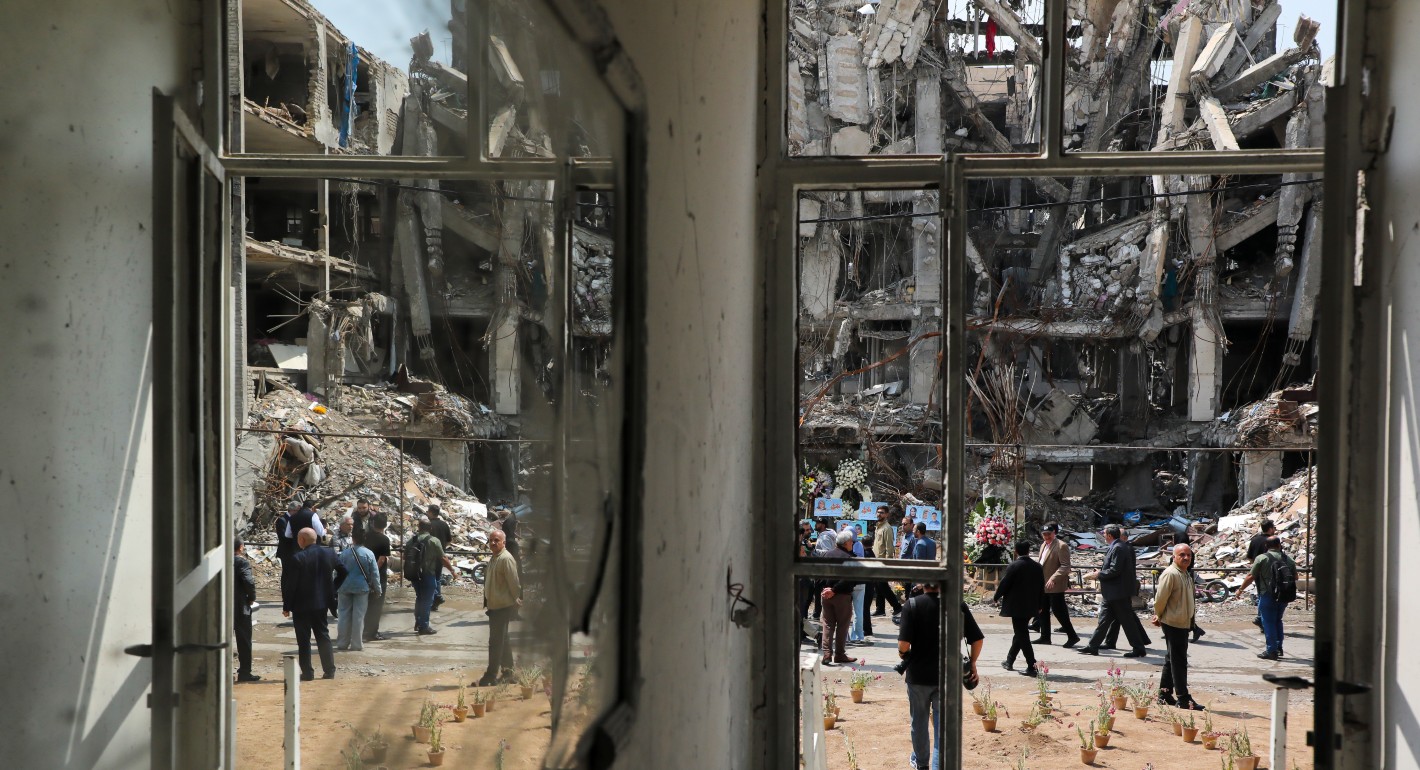
Tehran may conclude that its ability to disrupt the global economy via the Strait of Hormuz provides enough deterrence to begin quietly rebuilding its nuclear program.

Jane Darby Menton, Mohammad Ayatollahi Tabaar