

{
  "authors": [
    "Armenak Tokmajyan",
    "Jane Darby Menton",
    "Gaddam Dharmendra",
    "Rym Momtaz",
    "Dinakar Peri"
  ],
  "type": "event",
  "centerAffiliationAll": "",
  "centers": [
    "Carnegie India",
    "Carnegie Endowment for International Peace"
  ],
  "englishNewsletterAll": "",
  "nonEnglishNewsletterAll": "",
  "primaryCenter": "Carnegie India",
  "programAffiliation": "",
  "projects": [
    "Security Studies"
  ],
  "regions": [
    "India",
    "United States",
    "Middle East",
    "Europe"
  ],
  "topics": [
    "Foreign Policy",
    "Security"
  ]
}
Global Views on the West Asia Conflict
Tue, May 19th, 2026
Zoom Webinar
Invalid video URL
The conflict in West Asia has gone on for over seventy days, even as a mutually acceptable agreement continues to prove elusive. The conflict has fundamentally changed the region and has had a profound impact on the global economy. Structurally, the conflict has disrupted the rules-based international order, already under stress in recent years. Economically, the fallout is likely to last much longer, even if a durable ceasefire is reached anytime soon. Every region and every country across the globe is impacted, not least in the domains of energy and agriculture.
To dive deep into the multifarious dimensions of the conflict, this virtual discussion brought together experts from Carnegie centers across India, the Middle East, Europe, and the United States to offer grounded perspectives from each of these regions. The discussion was moderated by Dinakar Peri.
DISCUSSION HIGHLIGHTS
Core Actors and Dynamics in the West Asia Conflict: Participants discussed the shift in regional balance following the recent U.S.-Israel war against Iran, noting that strategic leverage has moved significantly towards Tehran. Before the conflict, Iran had undergone setbacks, including losing ground in Gaza, Lebanon, and Syria, as well as appearing willing to make concessions on its nuclear program. During the conflict, however, Tehran demonstrated both military and strategic resilience despite severe damage. The crisis has exasperated the trust deficit in the region, as demands on both sides grow increasingly incompatible. Domestic developments have also been significant. In Iran, for instance, the elimination of key moderate leaders has brought veterans of the Iran-Iraq War to the forefront making negotiations, including those on nuclear deferral, even tougher. Despite a struggling economy, strong nationalist sentiment and support for nuclear rights have ensured public support behind the regime in the aftermath of the strikes. Meanwhile, in the United States, participants highlighted a breakdown of a traditional national security decisionmaking process, with unclear ownership of the Iran file and an administration that shuttles between public threats and diplomatic outreach. This approach undermines sustained diplomacy, as Iran strongly prefers back-channel negotiations over Washington’s public ultimatums. The conflict is also growing unpopular in the United States, as fuel costs rise and midterm elections approach, placing the administration under pressure to find an exit. Participants also noted the situation of other regional states. Iran’s position now gives it greater influence over the situation in Lebanon, making it harder for the Lebanese state to assert control over Hezbollah. Gulf states such as Saudi Arabia and the UAE are navigating internal divisions and seeking to diversify their security partnerships, exploring arrangements with South Korea, Türkiye, and others.
Energy Security and Strategic Chokepoints: The discussion also focused on how the conflict has disrupted global energy supply chains and reshaped control over critical maritime passages, with consequences extending beyond the immediate region. Iran’s effective assertion over the Strait of Hormuz has been particularly significant. Tehran has announced a new Hormuz management system, reportedly to be jointly administered with Oman, raising questions about freedom of navigation, transit rights, and what normalization of passage through the Strait would look like going forward. Shipping companies and insurers have not accepted U.S. security assurances and are already coordinating passage through the Strait with Iran, reflecting a major change in the waterway. To cope with these disruptions, countries have already adopted or are in the process of framing different approaches. In Europe, France, and UK-led “Coalition of the Willing,” which now comprises more than thirty-five countries, is actively coordinating efforts to restore normal shipping and navigation. In the Asia-Pacific region, which remains heavily dependent on West Asian energy, participants observed that the dominant response has been diversification rather than replacement. India has turned increasingly toward American LNG supplies while also relying heavily on Russian oil and energy. Meanwhile, the crisis has accelerated renewed interest in civilian nuclear energy, giving countries like France an important strategic role, though the interim period has also seen a concerning return to coal across parts of Europe.
Great Power Competition and Shifting Alliances: Participants discussed the implications of the conflict on great power interests, with China and Russia emerging as clear beneficiaries. China has quietly supported Iran through continued oil purchases, alternative financial mechanisms, including yuan-denominated transactions and cryptocurrencies, and reported intelligence and satellite assistance. It simultaneously benefits from the United States’ entrenchement in West Asia. However, participants were cautious about China’s long-term regional ambitions as it presently seems content to observe developments from afar with a more formal role, while avoiding direct involvement. In the case of Russia, global quest for diversification of energy sources along with weakened confidence in U.S.-led security arrangements, presents Moscow an opportunity, especially greater demand for its energy. Europe’s position, on the other hand, has weakened considerably. Despite leading the Joint Comprehensive Plan of Action (JCPOA) negotiations, European states have been largely sidelined by the Trump administration. The Instrument in Support of Trade Exchanges, promised after the U.S. withdrawal from the JCPOA, was never effectively implemented, damaging European credibility in Tehran. Iran now prefers intermediaries like Türkiye, Saudi Arabia, Egypt, and Pakistan, which are seen as possessing greater leverage. In conclusion, participants observed that New Delhi has so far managed its balancing act with considerable skill, maintaining steady relations across multiple actors. Given factors such as diaspora, energy dependence, and exposure to the Strait of Hormuz navigation, regional stability remains a core interest. However, growing geopolitical pressures are making it increasingly challenging to maintain strategic autonomy.
This summary was prepared by Serene Joshua, young ambassador with the Security Studies Program at Carnegie India.
Carnegie India does not take institutional positions on public policy issues; the views represented herein are those of the author(s) and do not necessarily reflect the views of Carnegie, its staff, or its trustees.
Event Speakers
Nonresident Scholar Malcolm H. Kerr Carnegie Middle East Center

Armenak Tokmajyan is a nonresident scholar at the Malcolm H. Kerr Carnegie Middle East Center in Beirut. His research focuses on borders and conflict, Syrian refugees, and state-society relations in Syria.
Fellow, Nuclear Policy Program

Jane Darby Menton is a fellow in the Nuclear Policy Program at the Carnegie Endowment for International Peace and director of the Carnegie International Nuclear Policy Conference.
Nonresident Senior Fellow, Carnegie India
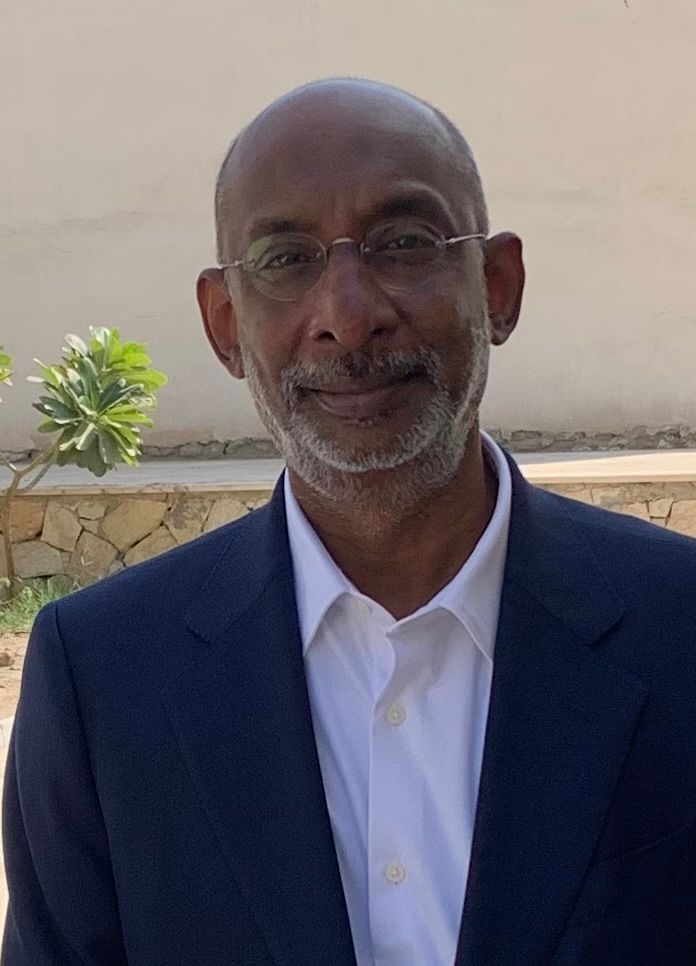
Gaddam Dharmendra is a nonresident senior fellow at Carnegie India. He joined the Indian Foreign Service in 1990 and served in various capacities in Indian Missions across the world and at the Ministry of External Affairs, South Block. His overseas assignments include stints at Indian Missions in Tehran, Dushanbe, Washington D.C., and Dhaka.
Editor in Chief, Strategic Europe

Rym Momtaz is the editor in chief of Carnegie Europe’s blog Strategic Europe. A multiple Emmy award-winning journalist-turned-analyst, she specializes in Europe and the Middle East and the interplay between those two spaces.
Fellow, Security Studies Program
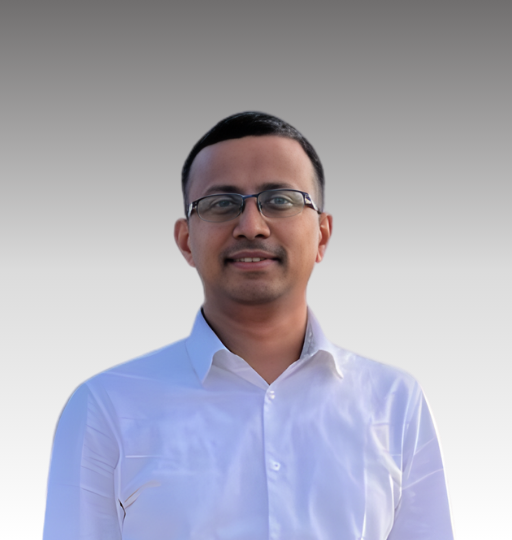
Dinakar Peri is a fellow in the Security Studies program at Carnegie India. Earlier, he was a journalist with The Hindu newspaper covering defense and strategic affairs for almost 11 years.